Hyper-Documenting
My mind does not keep pictures of my life, so I keep a record of it instead. That is why I have no fear about how my brain is built.
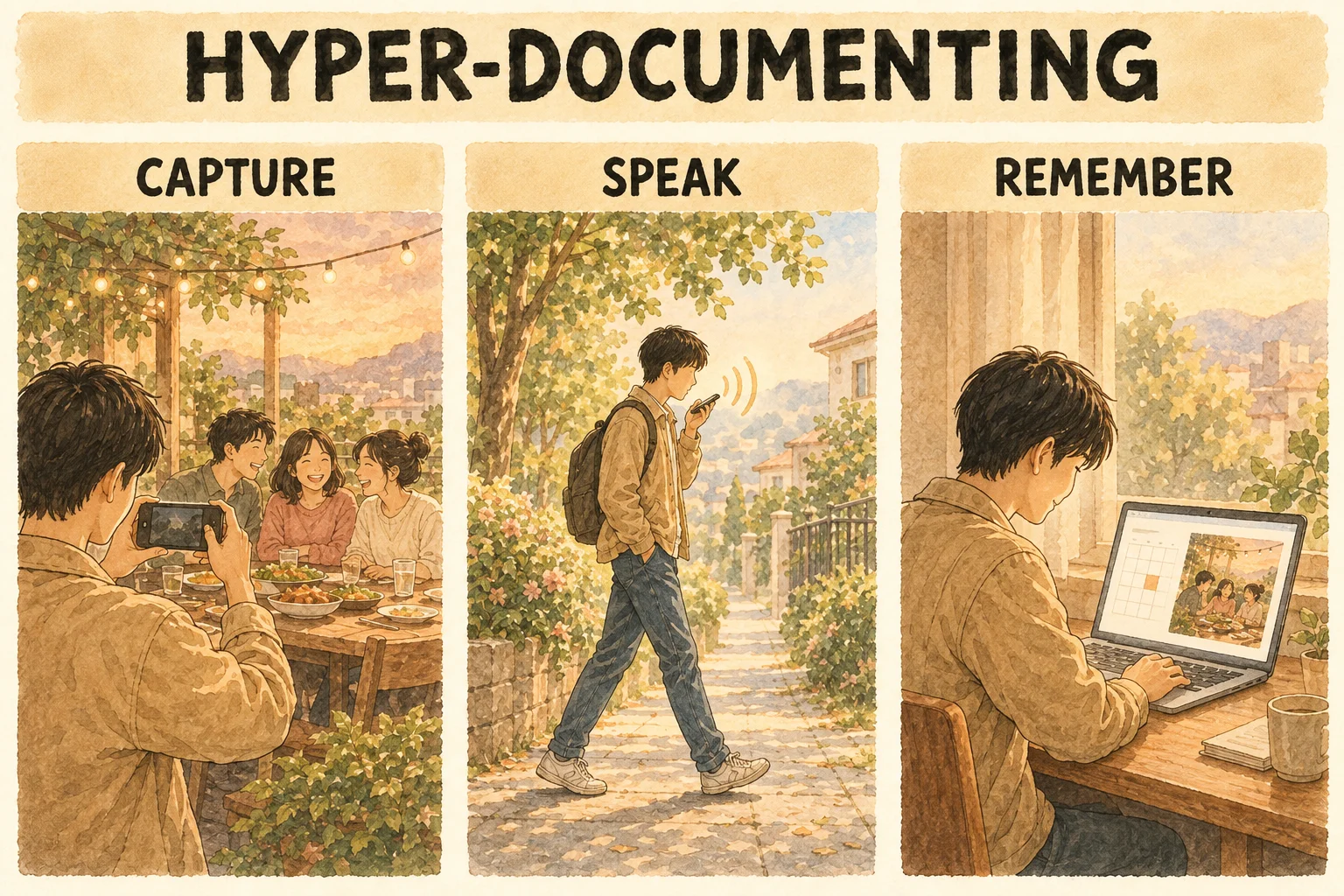
I record everything
I am a hyper-documenter. I love taking photos, taking videos, taking notes, and recording conversations. When something matters, I capture it.
For someone whose mind does not replay the past, this is how I live. My memory of my own life is thin, and I have made peace with that because the record is not thin at all. The people, the places, the words, the moments: they are written down, photographed, and saved.
Why I am not afraid
People sometimes hear that I cannot relive my memories and assume it must feel like loss. It does not, because I am not relying on my brain to hold everything.
The goal is simple. I want my AI to have access to my full life history, so I can ask something like "What was I doing on this date?" and get a real answer. My mind is free to do what it does well: feel, connect ideas, and move forward. The record holds the rest.
That is what I mean by not being afraid of my cognitive infrastructure. My brain is one part of the system, and the record is another.
How it grew
I kept journals before, on and off. Around 2019, with Notion, I started documenting my life much more deliberately, mostly by hand.
About a year and a half ago it became detailed, and the reason is voice. Typing everything was work. Speaking is not. Now I talk, and my words are transcribed. I record calls, and they become text I can search. The friction that used to make documentation a chore is almost gone.
The best time ever to have aphantasia
We literally live in the best time ever for people with aphantasia.
- You can speak words, and images appear. AI image tools give a mind without pictures a way to see what it feels. (More in What It Is Like.)
- You can speak words, and the words are remembered. Voice transcription turns a thought into a note before it disappears.
- You can record a conversation, and never lose what someone you love said to you.
- You can ask your own history questions, and get answers back.
A generation ago, a person like me would have had to fight their own memory. Now I just speak, and the record builds itself.
If you have aphantasia, start here
You do not need a perfect system. Start with one habit:
- Take the photo. Details you will not remember are exactly the ones worth keeping.
- Talk into your phone when a thought arrives, before it is gone.
- Record the conversations that matter, with permission.
- Keep it all somewhere you can search later.
Further Reading
- What It Is Like: the gifts and the costs, and why I love AI image tools.
- Moving On: a short memory needs a good record.
- You Are Not Broken